There’s a concept in engineering called signal versus noise.
The signal is the meaningful information.
The noise is everything interfering with it.
Lately, I’ve been wondering if mental health works the same way.
Not just individually, but generationally.
As someone living with Bipolar 1 disorder and overlapping mental health challenges, I’ve spent years trying to understand patterns. Not just in myself, but across time, family, environment, and culture. The deeper I look, the more I keep coming back to one unsettling thought:
What if the modern world is becoming too loud for the human nervous system?
And what if each generation is carrying more noise than the last?
Growing Up in Simpler Times
I was born in 1973 and grew up through the 1980s.
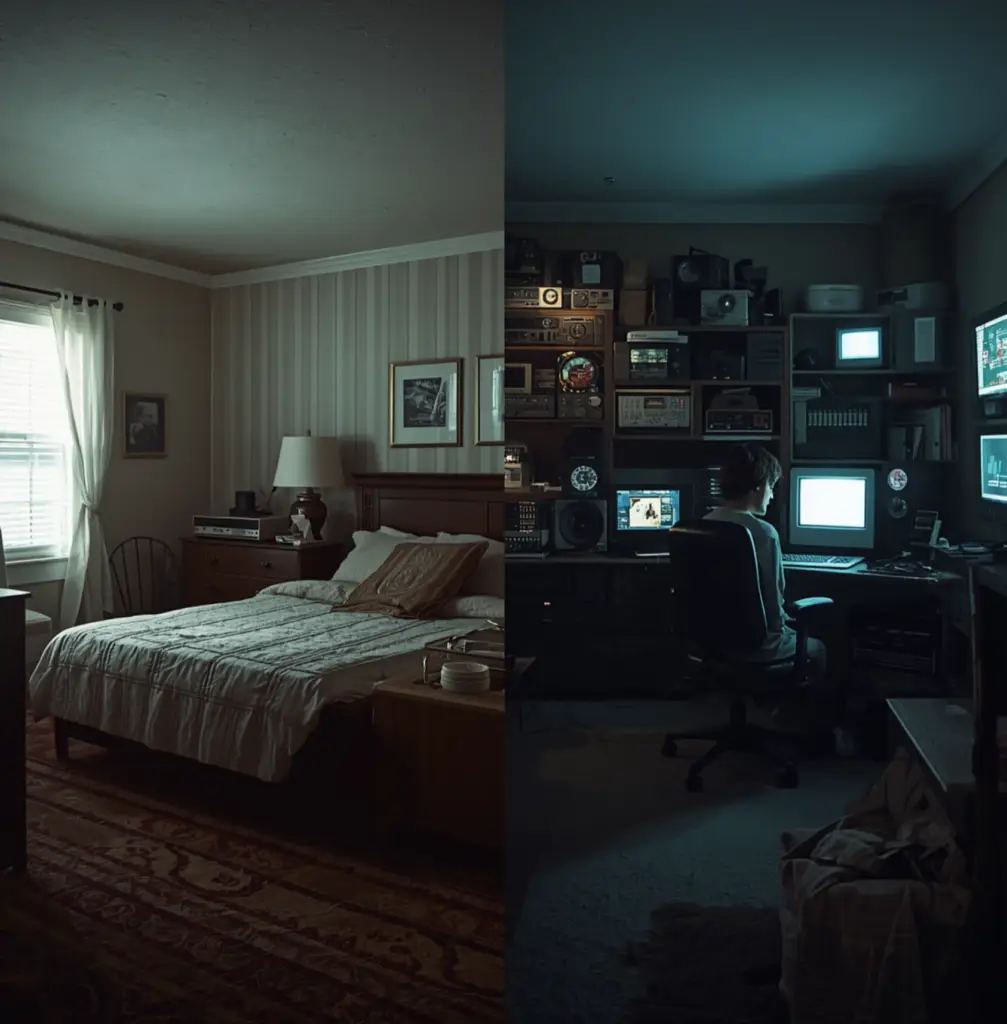
Back then, life was quieter. Not necessarily easier, just quieter.
There were no smartphones. No social media. No nonstop notifications. No 24-hour news cycle constantly feeding fear, outrage, comparison, and stimulation into our brains. We didn’t carry the world in our pockets.
When I look back now, I realize something important:
For someone wired like me, less noise may have meant more balance.
I wasn’t medicated. I didn’t have therapists, counselors, psychiatrists, or support systems built around mental health awareness. In many ways, mental illness was either misunderstood or ignored altogether. You learned to survive quietly.
And somehow, I did.
For years, I rode the momentum of my highs. The energy. The confidence. The productivity. Looking back, I can now recognize those periods for what they likely were, manic or hypomanic states that helped carry me through life before eventually demanding repayment.
The crash didn’t fully arrive until my 30s.
That’s when everything caught up with me.
The Next Generation: Early Intervention Begins
Then I think about my oldest son, born in 1992.
By then, the world had already changed.
Schools were becoming more aware of learning disabilities and behavioral struggles. Conversations around ADHD, emotional regulation, and mental health were more common. Support systems existed that weren’t available when I was young.
When he struggled in school, I pushed for a 504 Plan. We pursued counseling early. Medication entered the picture much sooner than it would have in previous generations. As parents, we were trying to do the right things with the information we had.
But at the same time, another shift was happening.
The noise was increasing.
Video games, computers, stereos, constant entertainment, bedrooms were no longer places to disconnect from the world. They became immersive stimulation environments. Attention became fragmented. Dopamine became easier to access.
As he got older, the struggles evolved.
Impulsivity. Substance abuse. Alcohol. Difficulty maintaining stability. Difficulty holding jobs. Emotional instability mixed with the pressures of adulthood.
And I often find myself asking difficult questions that don’t have easy answers:
Did the support help?
Did the overstimulation hurt?
Was the treatment enough to compete with the growing noise surrounding him every day?
I honestly don’t know.
Today’s Generation: Constant Stimulation From Birth
Now I look at my youngest son, born in 2013.
This generation has never known silence.
Children today are born directly into stimulation. Phones. Tablets. Streaming. Gaming. Social media algorithms designed to capture attention. Notifications engineered to interrupt thought patterns before the brain can rest.
And unlike previous generations, the noise isn’t occasional anymore.
It’s constant.
To be clear, my son has support that many people only dreamed of years ago. He attends a great school that understands his needs. He has both 504 and IEP support plans. He regularly sees a therapist and psychiatrist. His medication is monitored closely. As parents, we’re educated about disabilities and mental health in ways previous generations simply weren’t.
And still…
The struggles continue.
That’s the part that keeps me awake sometimes.
Because despite more awareness, more services, more diagnoses, more medications, and more support systems than ever before, many kids seem to be struggling harder, younger, and more intensely.
Why?
Are We Treating the Symptoms While Ignoring the Environment?
I’m not anti-medication. I’m not anti-therapy. Those tools save lives, including mine.
But I do wonder if we’ve become so focused on diagnosing and treating the individual that we’ve stopped asking bigger questions about the environment surrounding them.
What happens to a nervous system that never gets rest?
What happens to developing brains flooded with stimulation every waking hour?
What happens when comparison, fear, outrage, pressure, and dopamine become constant companions from childhood onward?
Maybe some minds are simply more sensitive to noise.
Maybe disorders like bipolar disorder, ADHD, anxiety, autism spectrum conditions, depression, and trauma-related disorders overlap more than we fully understand because they all involve regulation, emotional regulation, sensory regulation, attention regulation, nervous system regulation.
And maybe the louder the world becomes, the harder regulation becomes for everyone.
Especially for those already vulnerable.
The Fear I Carry
The truth is, I worry about where this goes next.
Not just for my children, but for society as a whole.
Every generation seems to inherit more stimulation than the one before it. More speed. More information. More pressure. More distraction. More comparison. More digital dependency.
More noise.
And I fear that the human brain, especially vulnerable brains, may not be evolving fast enough to handle it.
I don’t think mental health is only biological. I don’t think it’s only trauma. I don’t think it’s only genetics.
I think environment matters more than we want to admit.
The signal is still there, our humanity, our emotions, our identity, our ability to connect, think deeply, and feel peace.
But the noise is getting louder.
And sometimes I wonder if many of us are no longer suffering because we are broken…
but because we can no longer hear ourselves think.
#MentalHealth #BipolarDisorder #DigitalOverload #MentalWellness #Overstimulation